Two ways to record a night
A sleep study can happen at a sleep center or in your own bed. NHLBI says that your doctor decides which, and describes the home option as a portable device. MedlinePlus goes further and describes how each one works, which is the basis for this comparison.
The in-lab study
A lab study is an overnight stay in a private room at a sleep center. Technologists monitor the recording by video and audio, so they can see and hear what is happening and staff can help if you wake. Electrodes on the scalp, eyelids, chin, chest and legs connect to the recording equipment by wires, and a pulse oximeter on a finger or ear reads blood oxygen. The result is a rich recording of brain waves, eye movements, breathing, oxygen, heart rate and leg movements.
The home sleep test
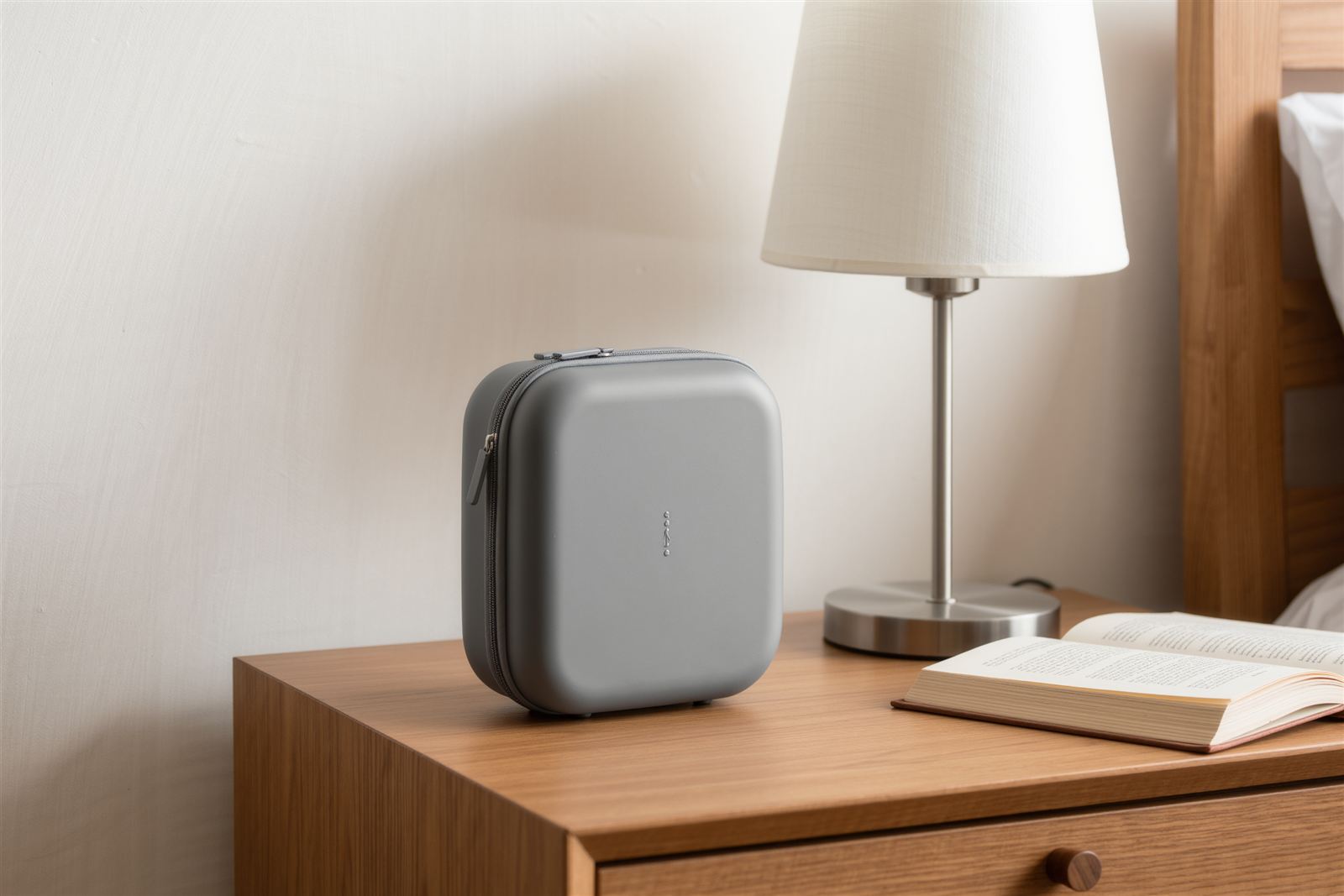
A home test uses equipment that is picked up from the provider or delivered to you. You attach the sensors yourself, following the provider's instructions, sleep in your own bed and return the device the next morning. A home test uses fewer sensors and records breathing rate, heart rate, blood oxygen and snoring.
MedlinePlus adds two limits. A home test diagnoses obstructive sleep apnea only, and MedlinePlus advises against it for people who have other sleep disorders or conditions that could worsen breathing. Those limits are the main reason a doctor, not the patient, chooses between the two.
Side by side
| Question | In-lab study | Home sleep test |
|---|---|---|
| Where is it? | A private room at a sleep center | Your own bed |
| Who attaches the sensors? | Sleep center staff | You, following the provider's instructions |
| Is anyone watching the recording? | Technologists, by video and audio | No |
| What does it record? | Brain waves, eye movements, breathing, oxygen, heart rate, muscle and leg activity | Breathing rate, heart rate, blood oxygen and snoring |
| What does it diagnose? | A range of sleep disorders | Obstructive sleep apnea only |
What stays the same
Preparation is the same either way: no alcohol or caffeine in the afternoon and evening, no naps, no lotions, gels or makeup, and no nail polish. Either way, your provider reviews the results afterward and builds a plan if a disorder is diagnosed. A home recording and a lab recording both end up as a report with the same kinds of terms, which the results guide defines.
Questions to bring to the appointment
- Which kind of study is being ordered, and why that one?
- If it is a home test, how is the device delivered or picked up, and when does it go back?
- If it is a lab study, what time should I arrive and how long will the night run?
- When will the results be ready, and who will go over them with me?
- Does my insurance or Medicaid plan cover this type of study at this location?
The Bronx directory lists sleep centers with Bronx addresses and gives each center's phone number so that these questions can go straight to the source.
Common questions
Is a home sleep test the same as a lab study?
No. A home test uses fewer sensors and records breathing rate, heart rate, blood oxygen and snoring. A lab study records brain waves, eye movements, muscle activity and more, and technologists watch the recording.
Who chooses between a home test and a lab study?
Your doctor. NHLBI says the doctor decides whether you test at a sleep center or at home with a portable device.
What can a home sleep test diagnose?
MedlinePlus says a home test diagnoses obstructive sleep apnea only, and advises against it for people with other sleep disorders or conditions that could worsen breathing.
Do I attach the sensors myself at home?
Yes. For a home test you attach the sensors yourself, following the provider's instructions, and return the device the next morning.
Keep reading
- What a sleep study is
- Sleep scoring and results
- Dental sleep medicine
- Choosing a sleep center
- Sleep in a dense city
Looking for sleep centers? See the Bronx directory or the centers in Queens and Manhattan.