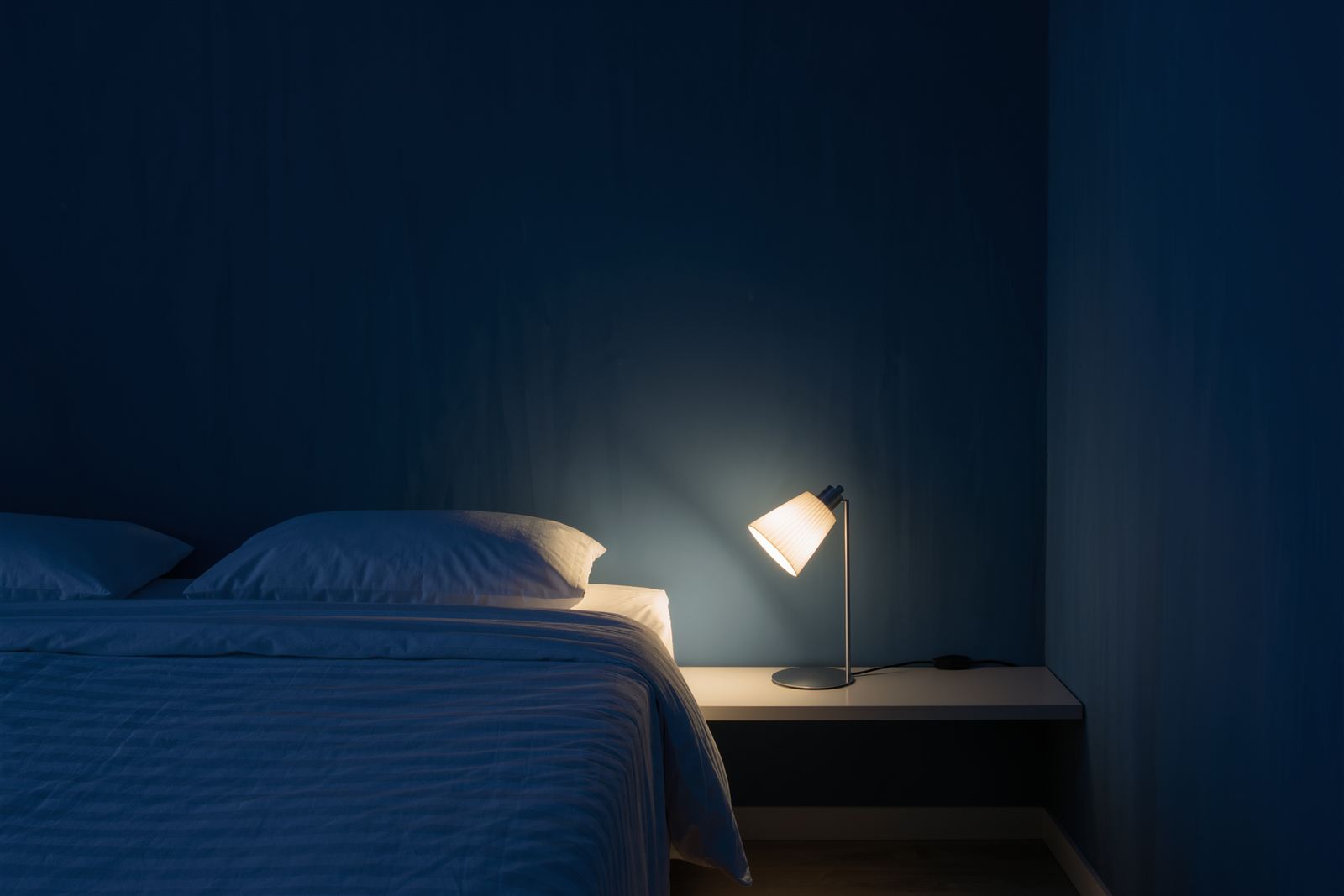
A test that watches the night
A sleep study is also called polysomnography. The National Heart, Lung, and Blood Institute (NHLBI) describes it as a painless test that measures how well you sleep and how your body responds to sleep problems. Doctors use it to help diagnose sleep disorders, which are conditions that disturb normal sleep patterns.
The name is worth a second look. "Poly" means many and "somno" means sleep, because the test records many body signals at once instead of just one.
What a sleep study records
A full-night study records brain waves, eye movements, breathing effort and rate, heart rate, blood oxygen levels and the electrical activity of the muscles. Each signal comes from a sensor, and the sensors are removable. At a sleep center they are placed on the scalp, face, eyelids, chin, chest and legs, with a small clip on a finger that reads blood oxygen.
The recording is what a doctor later reviews, so the sensors matter more than the bed. Their wires connect to equipment that keeps a continuous log of the night.
The main types of sleep study
- Polysomnography. The full-night study and the most common type. It records brain waves, heart rate, breathing and blood oxygen across a night of sleep.
- Multiple sleep latency test (MSLT). A daytime test that measures how quickly you fall asleep during a series of naps, using sensors that record brain activity and eye movements.
- Maintenance of wakefulness test. A daytime test that measures your ability to stay awake and alert.
- Activity monitors. Devices worn at home for several days, sometimes weeks, to show how much and how well you sleep.
- Portable home device. A smaller set of sensors you use in your own bed. The home and lab comparison guide covers it in detail.
A night at a sleep center
The overnight study takes place in a private room. Technologists watch the recording by video and audio from another room, and staff can help if you wake up and need something. The electrodes connect to equipment by wires, so the room is arranged for sleeping with the sensors on. In the morning, some centers ask you to fill in a short questionnaire about how you slept.
The only risk MedlinePlus lists is mild skin irritation where the electrodes were attached, and it goes away after they are removed.
Getting ready for the night
The preparation steps are the same for a lab study and a home study. MedlinePlus lists these:
- Avoid alcohol and caffeine in the afternoon and evening.
- Skip daytime naps.
- Skip lotions, hair gels and makeup, which can interfere with the electrodes.
- Skip nail polish and artificial nails, which can affect the finger sensor.
- Ask your provider whether to take your usual sleep medicines.
What the test can look into
NHLBI lists several groups of conditions that a sleep study can help diagnose or rule out: sleep-related breathing disorders such as sleep apnea, sleep-related seizure and movement disorders, disorders that cause extreme daytime tiredness such as narcolepsy, and restless legs syndrome. The study is one piece of information, and a provider combines it with a conversation and an exam.
Who decides where the study happens
Your doctor decides whether you test at a sleep center or at home with a portable device. That decision belongs with the doctor who knows your health history, which is why the guide on choosing a sleep center focuses on questions to ask rather than answers to give.
After the night
Your provider reviews the results and, if there is a diagnosed sleep disorder, builds a treatment plan with you. Questions about what the numbers mean go to that provider. The guide to sleep scoring and results explains the terms that appear in a report.
Common questions
Does a sleep study hurt?
NHLBI calls polysomnography a painless test. MedlinePlus lists mild skin irritation from the electrodes as the only risk, and says it goes away after they come off.
How long does a sleep study last?
Tests at a sleep center usually last overnight. Daytime tests such as the multiple sleep latency test run through a series of naps. Activity monitors are worn for several days and sometimes weeks.
What should I avoid before a sleep study?
MedlinePlus says to avoid alcohol and caffeine in the afternoon and evening, skip naps, and skip lotions, gels, makeup and nail polish. Ask your provider whether to take your usual sleep medicines.
Can a sleep study be done at home?
Sometimes. NHLBI says your doctor decides whether you test at a sleep center or at home with a portable device. The home and lab guide compares the two.
Keep reading
- Home sleep testing and in-lab studies
- Sleep scoring and results
- Dental sleep medicine
- Choosing a sleep center
- Sleep in a dense city
Looking for sleep centers? See the Bronx directory or the centers in Queens and Manhattan.